 Go to Rhine-Waal University

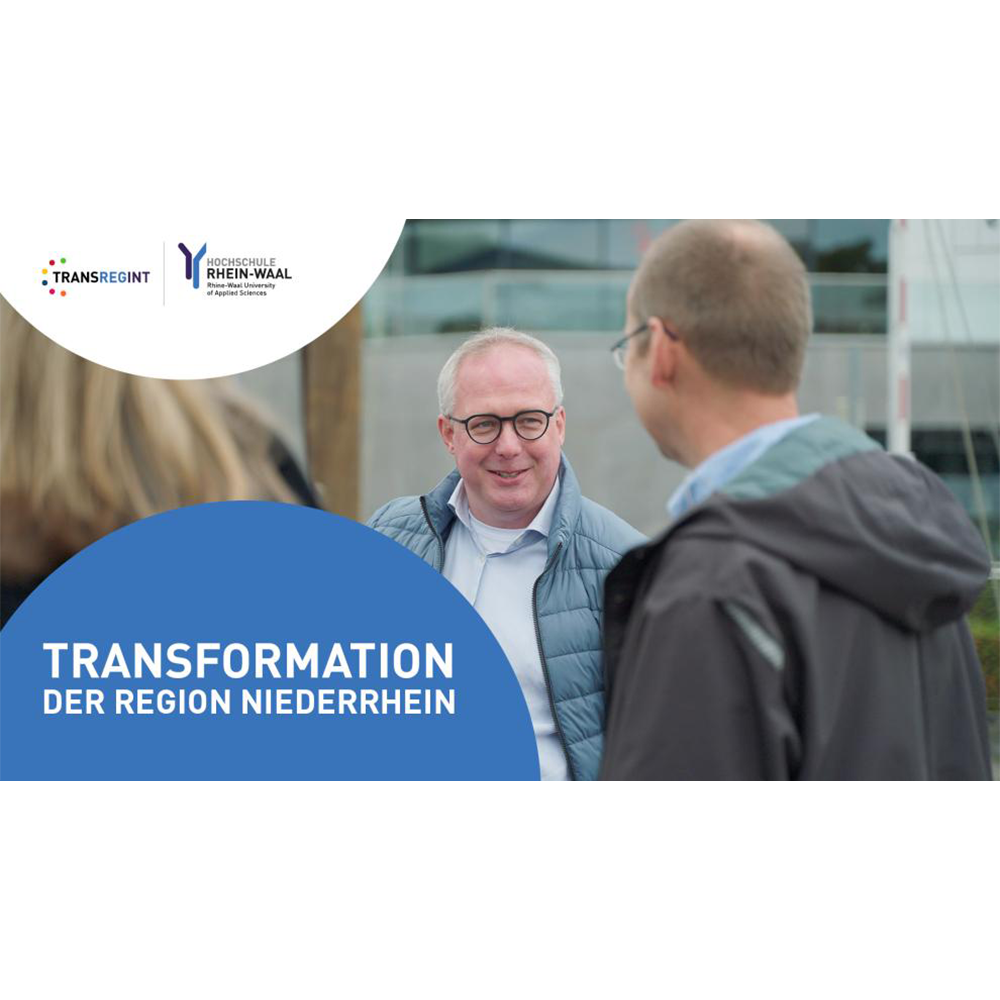
Through the TransRegINT project, we at Rhine-Waal University of Applied Sciences have set ourselves the goal of helping to shape the future of the Lower Rhine region in a sustainable and science-based manner. The project is being funded with just under 10 million euros from January 2023 to December 2027 as part of the ‘Innovative University’ funding initiative of the Federal Ministry of Education and Research. The funding initiative supports universities in translating research findings even more effectively into creative solutions for the pressing challenges of our time – in doing so, we are guided by the United Nations’ 17 Sustainable Development Goals.
As the TransRegINT team, we take responsibility. We want to shape the future of the Lower Rhine region together through exchange, applied research, pilot projects and capacity building.
Would you like to join the TransRegINT team? You can find the latest job vacancies here.
Find out more about the project and watch exciting videos on our website.
Exchange fosters understanding and new ideas
To make the Lower Rhine region fit for the future, it is important to us to involve everyone. This includes, amongst others, citizens, representatives of associations, local authorities, schools, businesses, politicians, as well as academics, students and university staff. Their acceptance and involvement are crucial to the success of the transformation.
Our network already consists of numerous people. And we want to expand it further. Through events, direct outreach, media presence and active participatory projects, we create opportunities for participation and networking.
Through applied research, we contribute to the region
We see science as a driving force for innovation and sustainability. Scientific findings form the basis for forward-looking solutions. Through various transformation projects, we address current societal challenges. We research and develop potential solutions, such as energy storage options (hydrogen), forward-looking agroforestry systems, or virtual environments to make assistive systems accessible to people with physical or mental disabilities.
Pilot projects combine research and practice
To apply scientific findings in practice, we initiate and support the implementation of illustrative and participatory pilot projects. In doing so, we collaborate with stakeholders in the region, such as farmers who provide land or entrepreneurs who wish to use hydrogen technology in their production. We make our resources available and open up the university’s own infrastructure (e.g. laboratories) to realise projects together. In this way, we bring together diverse expertise and enable everyone to participate and/or follow the projects.
We are preparing ourselves for the future!
As a university, it is important to us to share knowledge and ensure everyone has a say. Our aim is to break down barriers. We possess a vast store of knowledge and are constantly accumulating further knowledge through our projects. To circulate this knowledge and expertise, we offer information and further training events. Furthermore, we aim to empower others to become actively involved in the transfer of knowledge and skills themselves.
Contact for questions and suggestions:
transregint(at)hochschule-rhein-waal.de

Project members at the faculty
Prof. Dr Ralf Klapdor (Dean of the Faculty of Society and Economics)
Dr Vanessa Meinen (Research Associate, Competence Hub Coordinator)
Prof. Dr Oliver Serfling (Professor of Economic Policy and Development Economics)
Prof. Dr Ingrid Jungwirth (Professor of Social Sciences specialising in diversity and inclusion)
Contact person
Christina Martens (Interaction Hub Coordinator)
transregint(at)
