The day was devoted to quality management, programme development and the question of what good teaching looks like in practice.
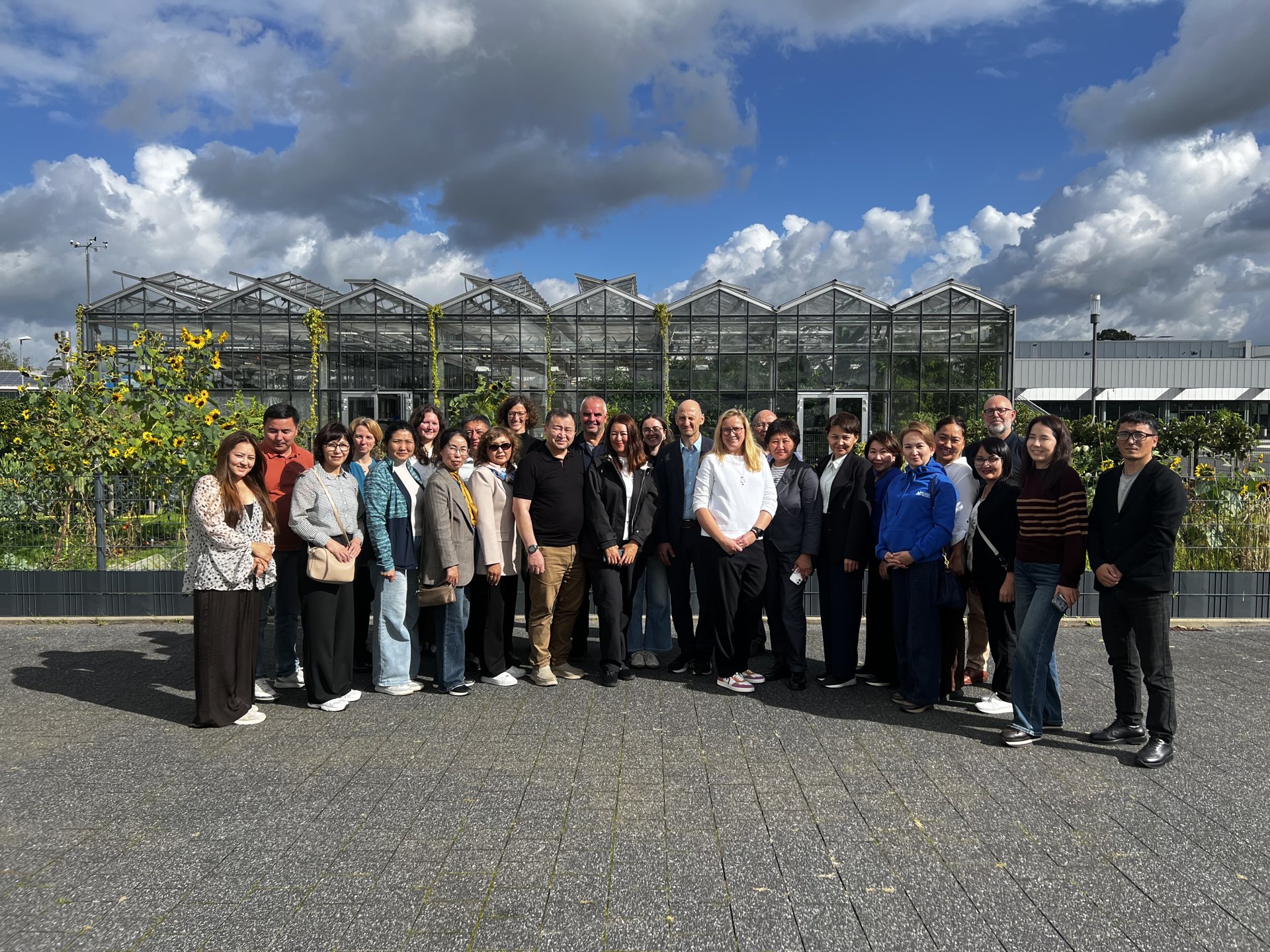
The visit was part of a delegation trip by the accreditation agency ASIIN, which is supporting the Kazakh university in the further development of its degree programmes. The group consisted of representatives from Gumilyov Eurasian National University in Astana.
Four faculties, two campuses, around 6,200 students, 61 per cent of whom come from abroad. With these figures, Prof. Dr. habil. Tatiana Zimenkova, Vice-President for International Affairs and Diversity, and Prof. PD Dr.-Ing. Sylvia Moenickes, Dean of the Faculty of Life Sciences, welcomed the guests and began by giving them an insight into Rhein-Waal University of Applied Sciences.
The fact that around three-quarters of the degree programmes are taught in English quickly made it clear that international study conditions in Kleve and Kamp-Lintfort are not a marginal issue, but rather shape everyday university life. Consequently, there was considerable interest in how degree programmes are developed and organised under these conditions. International cooperation is also a key aspect: Rhein-Waal University of Applied Sciences maintains partnerships with 96 partner universities in 39 countries and, together with the German-Kazakh University, offers the International Relations degree programme.
But how does a university actually determine whether a degree programme is successful? Dr Rebecca Müller, Head of the Department of Quality Management in Studies and Teaching at the Centre for Quality Development, addressed this question.
She demonstrated that quality management does not begin only when problems arise. Rather, degree programmes are supported throughout their entire life cycle: from the initial idea and conception, through implementation and evaluation, to further development or, where necessary, discontinuation.
How this works in practice was illustrated using tools such as the Degree Programme Compass, key performance indicator reports, course evaluations and the quality dialogue between faculties and the Executive Board. The numerous questions from the guests showed that they were particularly interested in gaining an insight behind the scenes: What data is collected? What can be gleaned from it? And what conclusions does a university draw from it?
The first-year student survey provided one example. It shows that international students face more than just academic challenges, particularly at the start of their studies. Bureaucracy, finding accommodation and language barriers can make settling in Germany considerably more difficult. Such findings should not simply disappear into reports: through initiatives such as the Welcome Centre, the university supports international students as they settle in and throughout their studies.
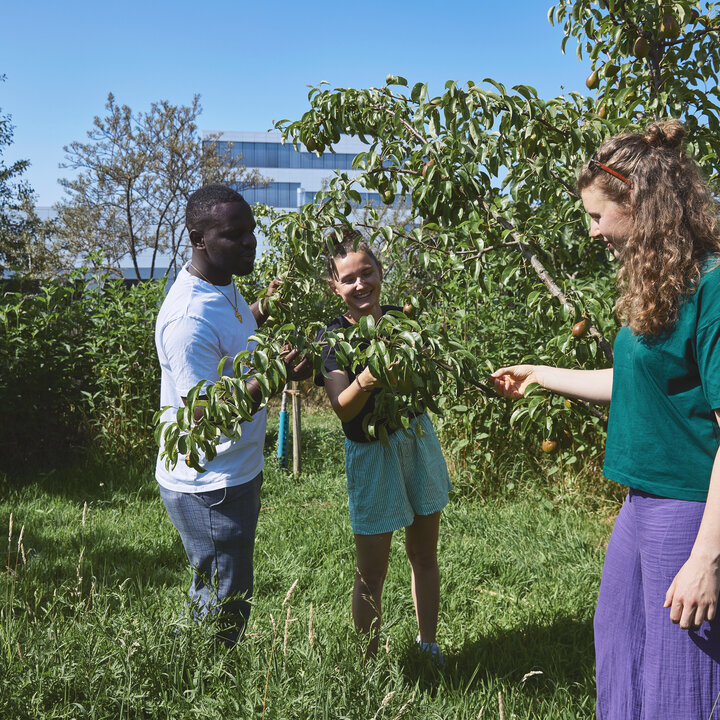
The delegation then gained a practical insight into what study conditions can look like at various learning venues within the Faculty of Life Sciences. Prof. Dr Matthias Kleinke, Programme Director of the B.Sc. in Sustainable Agriculture, guided the guests through laboratories and seminar rooms and across the experimental plots in front of the faculty building. On the walls, student project work on topics such as malaria, rabies and influenza was on display, showcasing the subjects students engage with during their studies.
However, the spot where the most smartphones were whipped out was behind glass doors: the Tropical Greenhouse. Amidst banana clumps, papaya trees and cocoa plants, the guests learnt how the climate-controlled chambers are used for research and teaching. This brought into immediate focus what had previously remained somewhat abstract in the discussions: designing a degree programme involves not only modules, examination regulations and key figures, but also the spaces in which students can learn, conduct research and experiment.
This idea was also taken up in the afternoon by the Faculty of Technology and Bionics. Prof. Dr Alexander Struck, Dean of the Faculty, and Prof. Dr-Ing Kai Masuch, Director of Studies, presented the new curriculum concept for the Bachelor’s degree programmes and showed the delegation the innovative learning spaces set up for this purpose.
At least as important as the official programme were the conversations in between: in the corridors, outside the greenhouse or over lunch together in the canteen. For despite differences in higher education systems, many common themes emerged over the course of the day.
How can degree programmes remain internationally compatible? How can quality be not only documented but also continuously improved? And how can students be effectively supported throughout their studies?
For some of these questions, there is no solution that can simply be transferred from Kleve to Astana. This makes it all the more important to discuss which approaches work, what experiences other universities have had, and which ideas can be taken on board for one’s own further development.