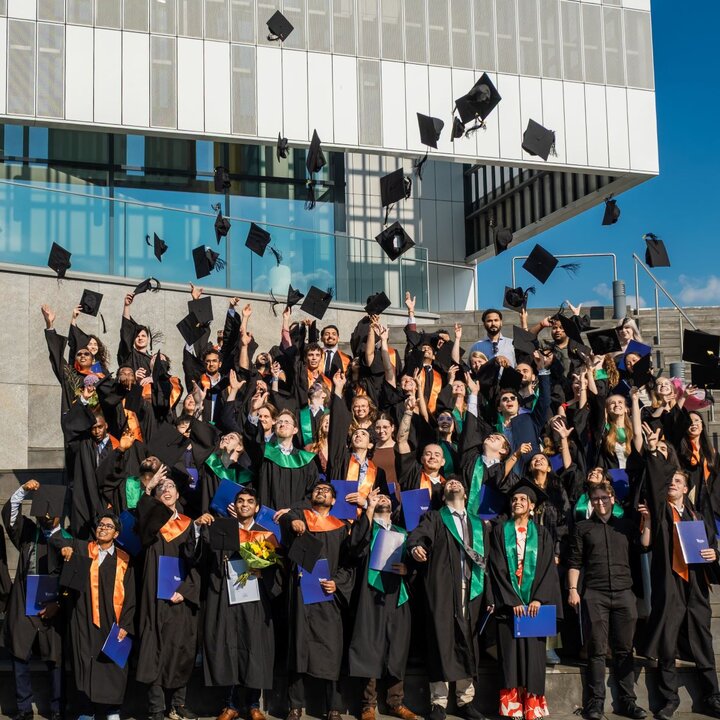

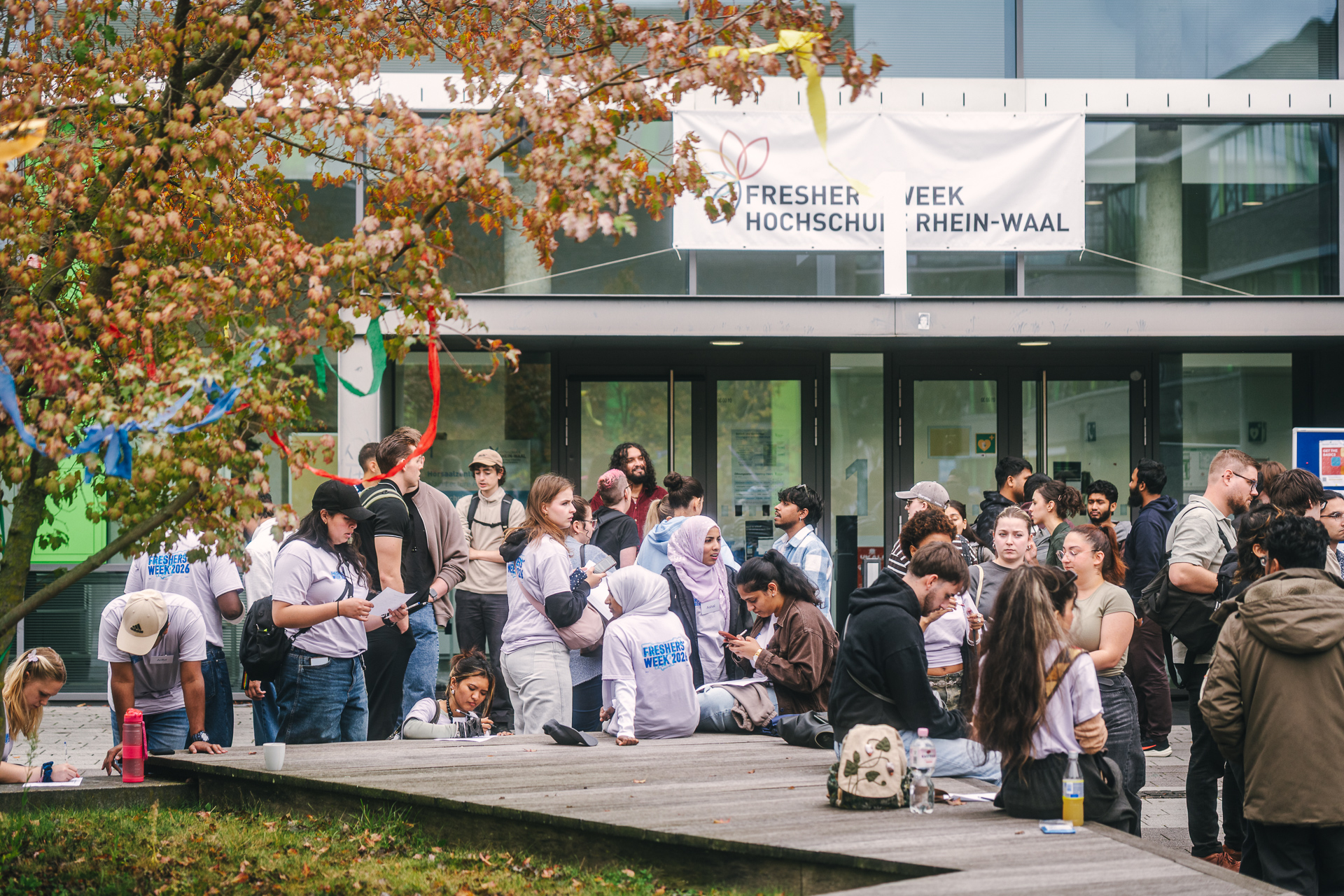
With 1,746 first-year students, Rhein-Waal University of Applied Sciences (HSRW) is kicking off the 2026/27 winter semester. Despite the absence of a school-leaving year in North Rhine-Westphalia (NRW), enrolment figures at HSRW have risen by 35 per cent compared with the previous winter semester. The degree programmes in Engineering (B.Sc.), Biological Resources (M.Sc.), Sustainable Tourism (B.A.) and Environment and Energy (B.Sc.) have been particularly successful.
There had been considerable concern amongst colleges and universities in NRW: due to the transition from the G8 to the G9 system, there was no Abitur cohort at grammar schools this year. The HSRW Executive Board had already anticipated last year that the university would likely be less severely affected by this – not least due to its international focus and the appeal of its interdisciplinary and English-taught degree programmes, which also attract prospective students from across Germany. It is therefore all the more pleasing that the latest enrolment figures confirm this assessment. With 1,746 first-year students, HSRW has recorded its highest number of new enrolments in the past nine winter semesters. This means that, as at the cut-off date of 30 October 2026, a total of 6,811 young people are studying at the university’s two campuses in Kleve and Kamp-Lintfort.
“In this extraordinary year in particular, it is clear that our degree programmes, with their forward-looking and interdisciplinary focus on topics such as sustainability, digitalisation, artificial intelligence and social justice, strike exactly the right chord with today’s generation,” summed up University President Prof. Dr Oliver Locker-Grütjen. “The challenges of the future are immense. Through our teaching and research, we aim to prepare young people from Germany and around the world for these challenges as best we can,” Locker-Grütjen continued.
In particular, the adjustments made to the degree programme portfolio over the past three years are proving effective. For example, the Engineering, B.Sc. programme has been revamped in terms of both methodology and content and has set a new record with 300 new enrolments.
The switch to teaching the Sustainable Tourism, B.A. degree programme in English has also proved successful: together with Engineering, B.Sc., Biological Resources, M.Sc. and Environment and Energy, B.Sc., it ranks among the four most sought-after degree programmes in this enrolment phase.
The popularity of HSRW amongst international students is evident once again this year. A particularly large number of first-year students come from Asia and Africa. “The strong international community in particular is well connected and feels at home at HSRW. The students share these positive experiences back in their home countries, which is why we are seeing an increase in students from certain smaller nationalities,” says Locker-Grütjen.