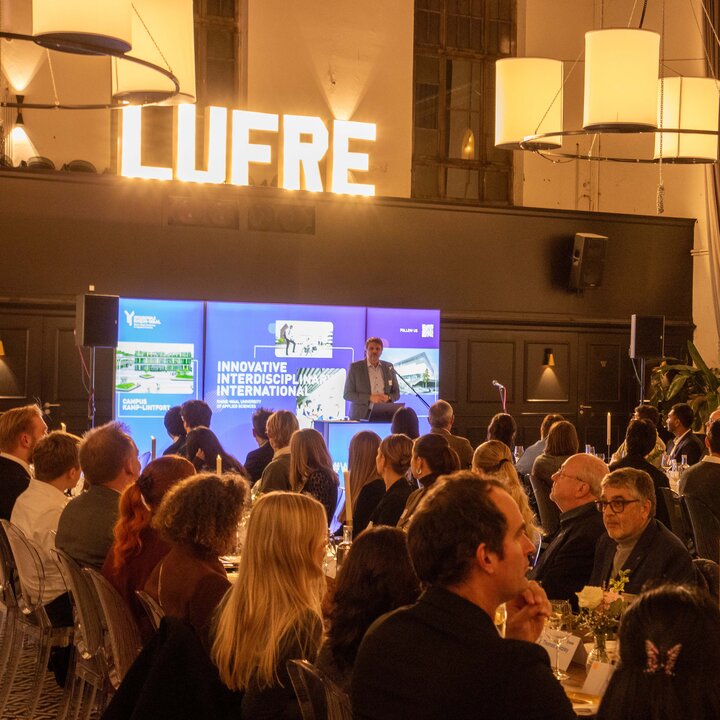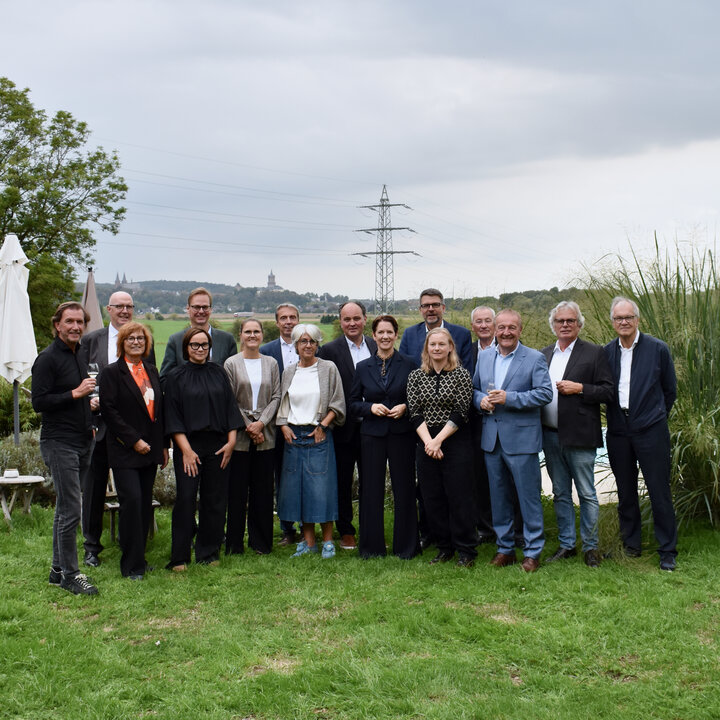

The first Energy Symposium organised by Rhein-Waal University of Applied Sciences (HSRW) demonstrated how important dialogue between business, research and the energy sector is in order to tackle the challenges of the energy transition together. The approximately 70 participants and the in-depth discussion confirmed the need for such dialogue and lay the foundations for a follow-up event in 2027.
Moderated by Dr Theresa Schredelseker, Head of the Science Management and Communication Unit at the ZBT – Centre for Fuel Cell Technology in Duisburg, six speakers from the worlds of research and business shared their experiences, practical examples and insights. “We need these different perspectives to shape the whole into a functioning energy system,” said Theresa Schredelseker at the outset, emphasising the importance of interfaces and exchange between the various stakeholders and approaches to providing a resilient and sustainable energy supply, including in the Lower Rhine region.
The presentations ranged from wind energy in North Rhine-Westphalia and offshore wind, through the production of green hydrogen and an outlook on the EU-wide hydrogen core network, to public acceptance of green technologies for climate protection. From a business perspective, two further presentations addressed the demand for and necessity of battery storage systems and grid connections, as well as the data-driven optimisation of industrial furnaces.
Recurring themes in the presentations were economic viability, resilience and a lack of grid connections. For instance, in the construction of wind turbines, as well as in the production of green hydrogen, economic viability is a key criterion in deciding whether to proceed with or abandon a project. Resilience in relation to supply chains – for example, for the construction of electrolysers or offshore wind turbines – was another key topic. A lack of grid connections currently represents the bottleneck of the energy transition. Furthermore, flexibility in the scheduling of energy-intensive work processes – such as shifting peak loads or buffering them using electricity storage systems – will become increasingly important in the future.
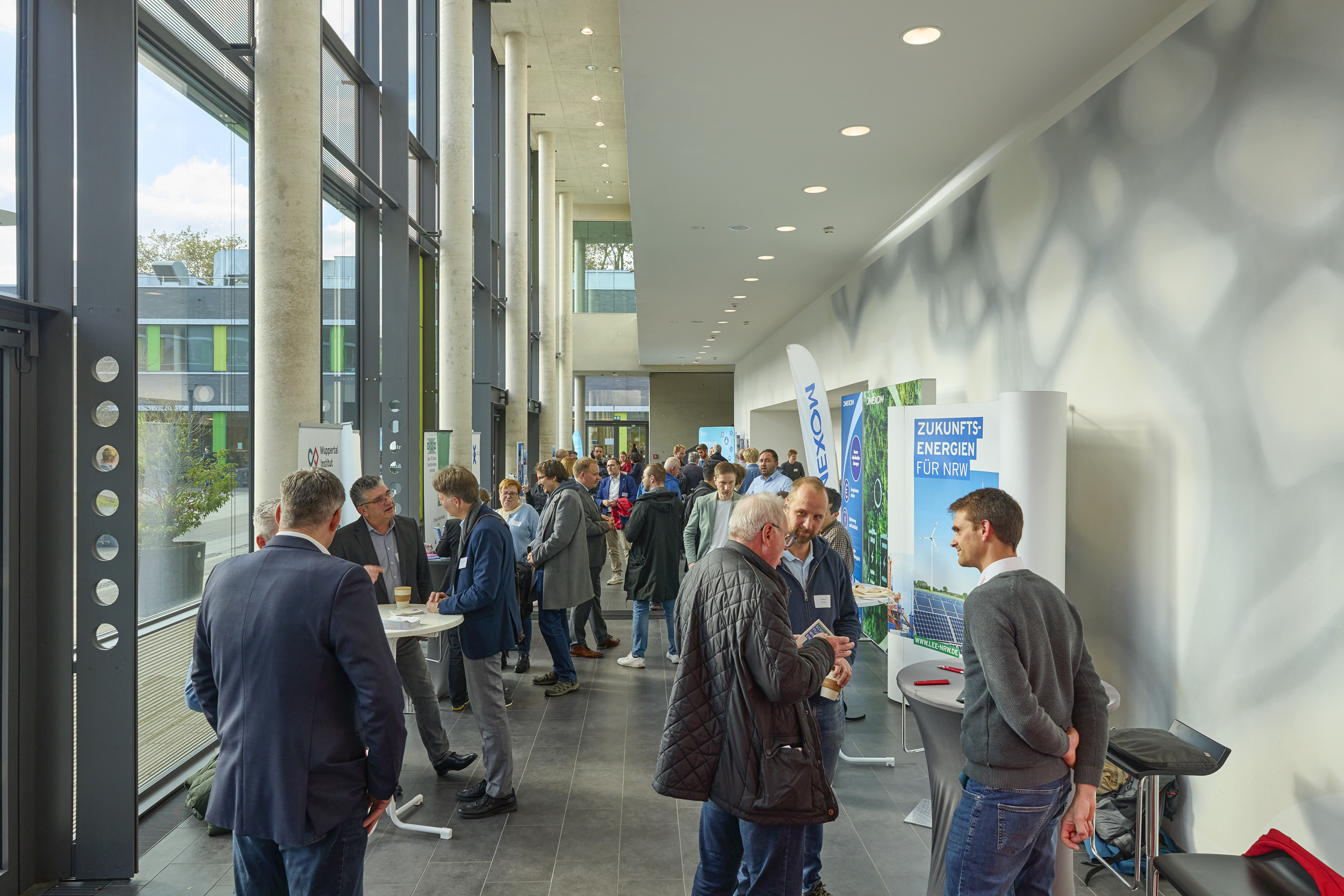
The Energy Symposium was organised by Prof. Dr Irmgard Buder from the Faculty of Communication and Environment and Thomas Klimeck, Renewable Energy Transformation Manager for the Lower Rhine region in the HSRW’s TransRegINT project. They have achieved their aim of facilitating networking for the energy transition. “The wide-ranging insights sparked discussions over delicious canapés afterwards, encouraged participants to delve deeper into topics, and led to new contacts being made – which may well mark the start of joint projects,” says Thomas Klimeck, looking back enthusiastically on the HSRW’s first Energy Symposium. “The questions following the individual presentations alone showed that this was an audience of experts keen to make a difference. And there was also a buzz of activity at the exhibition stands of the presenting institutions and companies.” The programme featured high-calibre speakers, with contributions from Hydrogen Pro, Ipsen International GmbH, the North Rhine-Westphalia Renewable Energy Association (LEE NRW), Omexom Smart Technologies GmbH, RWE and the Wuppertal Institute.
The Energy Symposium 2026 is not intended to be a one-off event; the positive response it received has reinforced plans for a follow-up event next year and sparked further ideas. Thomas Klimeck: “Given the HSRW’s geographical location alone, we would also like to involve our Dutch neighbours in a follow-up event.”