

Information Engineering and Computer Science, MSc
For data enthusiasts and analysts
Are you interested in extracting new knowledge and insight from large data collections? Do you know your way around maths and programming languages, but want to advance your professional skills and understanding in both areas to even higher levels? Then a master’s degree programme combining computer science, AI, logistics, environment and energy, and distributed systems is perfect for you.
Here you’ll learn how to take large amounts of data in each of these fields and transform them into valuable new findings and insights.
At a glance
Master of Science
Full-time
3 semesters
Unrestricted admission (no Numerus Clausus)
Kamp-Lintfort
English
1 September
1 March
Why study Information Engineering and Computer Science, MSc at Rhine-Waal?


What makes this degree programme special?
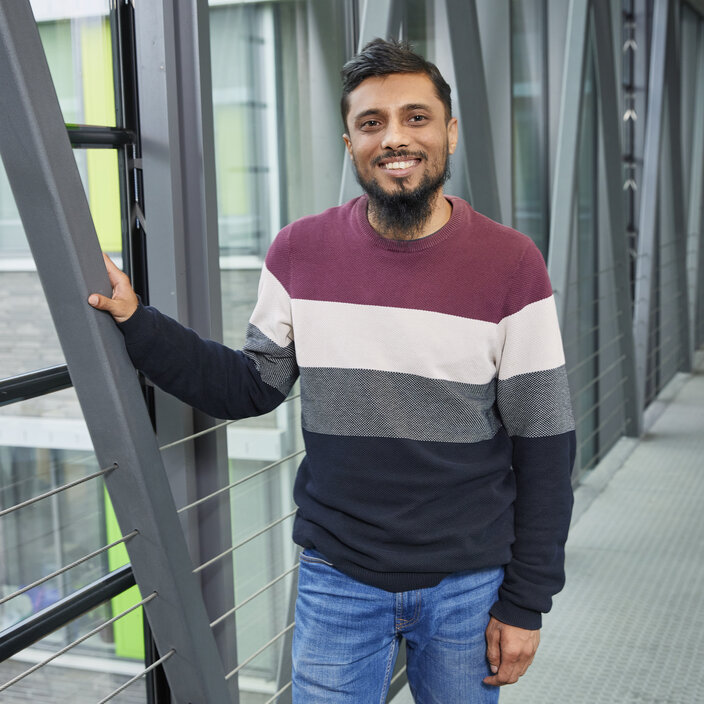
Muhammad Naofal Nirvana shares his experiences.

Programme structure and content
With this Master’s degree, you’ll be ready for tomorrow’s job market. You’ll learn how to tackle real-world challenges – creatively, practically and as part of an international team.
Building on your Bachelor’s degree, you’ll open up new career opportunities in areas such as:
- Information and data management
- Artificial intelligence
- Web and cloud technologies for large-scale storage and computing solutions
- Simulation of complex systems
- Development of decision support systems
- Hardware and software solutions for automated logistics systems
- Embedded systems for the automotive or medical technology sectors
Your advantage: You combine cutting-edge knowledge with hands-on projects – making you a strong candidate for international companies and research institutions.
Reach your goal in just three semesters
Semesters 1–2: Deepen your knowledge & put it into practice
In the first two semesters, you’ll explore your field in depth – not just in theory, but through hands-on application. You’ll work with cutting-edge methods and tools, develop your own solutions and put them into practice in real research projects. Lectures give you the essential foundations, while seminars and practical sessions help you sharpen your expertise and give you the space to explore and refine complex ideas.
You’ll gain in-depth knowledge in areas such as System Simulation, Data Mining, Data Analysis, Information Engineering, Statistics and Geoinformatics. At the same time, you’ll develop key skills in scientific and technical communication, intercultural management and innovation management. Elective modules allow you to specialise in areas such as Software and Systems, Environmental Science oder Supply Chain.
Semester 3: Master’s thesis & colloquium
In your third semester, you’ll focus entirely on your Master’s thesis and colloquium. This is your opportunity to combine academic expertise with practical application and demonstrate what you can do.
Studying this Master’s programme in English gives you several real advantages. You’ll study in the language used worldwide across science, technology and business, preparing you for an international career. Strong English skills are essential for many jobs in IT and technology – and here, you’ll use and improve them every day.
Your degree will open up exciting career and research opportunities not only across Europe, but around the world. At the same time, you’ll study in a multicultural environment, experience different ways of thinking and working, and develop valuable intercultural skills.
And because the latest academic publications and research findings are usually published in English first, you’ll always be up to date with developments in your field.
Admission is based on an application and selection process.
To be eligible for the Master’s programme in Information Engineering and Computer Sciences, you need to meet the following requirements:
- A first professionally qualifying university degree (e.g. BSc, BA, Diplom or equivalent) from a degree programme that included practical and technical computer science as well as fundamental courses in mathematics, natural sciences and engineering. If you do not meet all of these subject requirements, you may compensate for individual gaps by providing evidence of additional knowledge and qualifications. You may submit a written statement of no more than 1,000 words to explain these.
- An overall grade of at least 2.3 for your first degree.
- If you completed your Bachelor’s degree outside the European Higher Education Area, a TestAS certificate relevant to this degree programme with a score of at least 100, or alternatively a Graduate Aptitude Test (GATE) or Graduate Record Examination (GRE; Q = 160, V = 145, A = 4.5).
- Proof of English proficiency at a minimum level of B2 (CEFR) or equivalent.
Application process
You can apply for Master’s programmes via Rhine-Waal University of Applied Sciences application portal. There you will find all the relevant information you need for your application and will be guided through the process step by step.
Admission requirements are assessed on a case-by-case basis for all Master’s programmes. You can then download your letter of acceptance or rejection from the Application portal.
Did you complete your school-leaving qualifications outside of Germany? If so, you’ll need to apply via uni-assist. The platform will guide you step by step through the application process. Your documents will then be checked by uni-assist and, provided you meet the admission requirements, forwarded to Rhine-Waal University of Applied Sciences for a final decision and the issuance of a decision letter. You will then be informed by email.
Insights


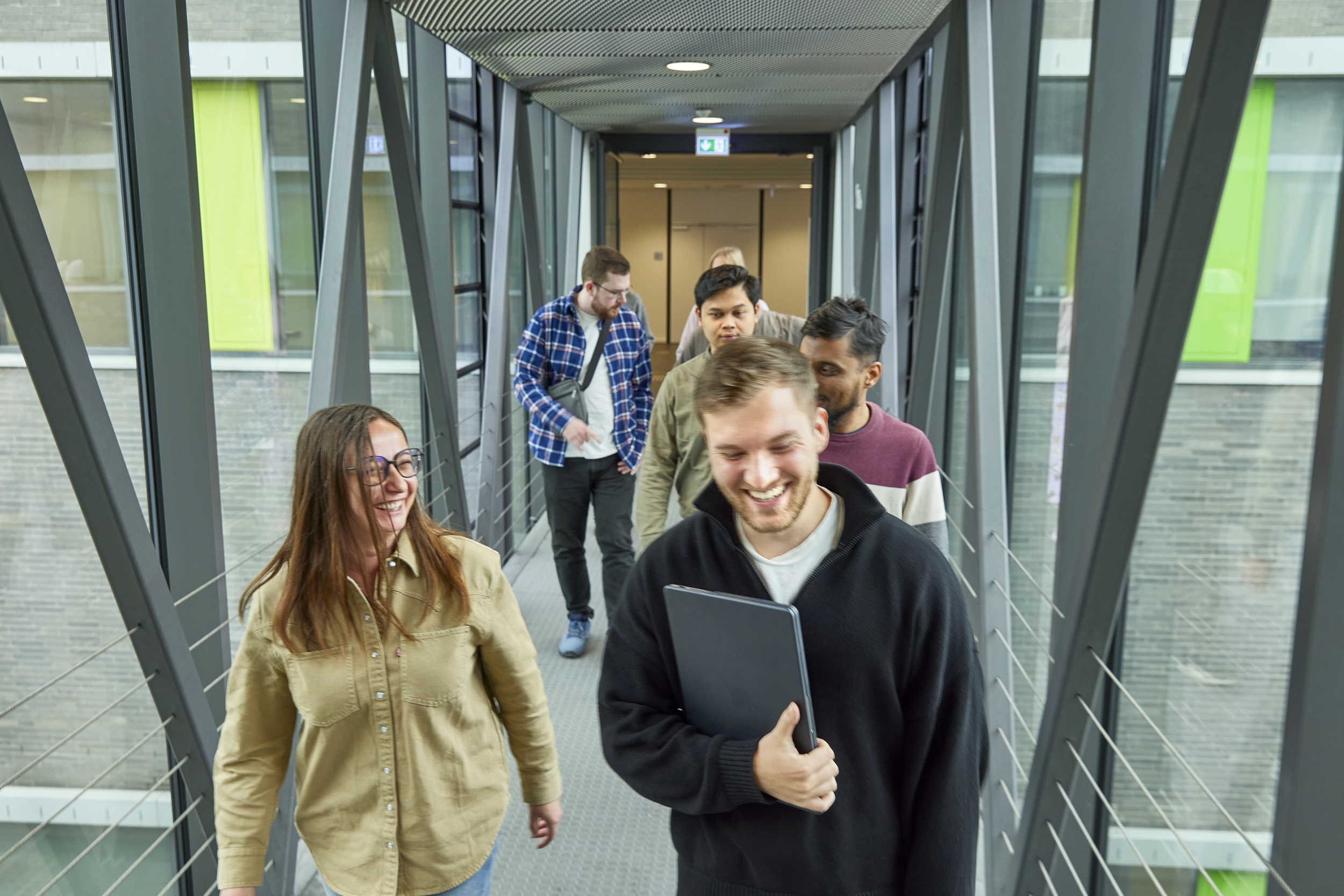
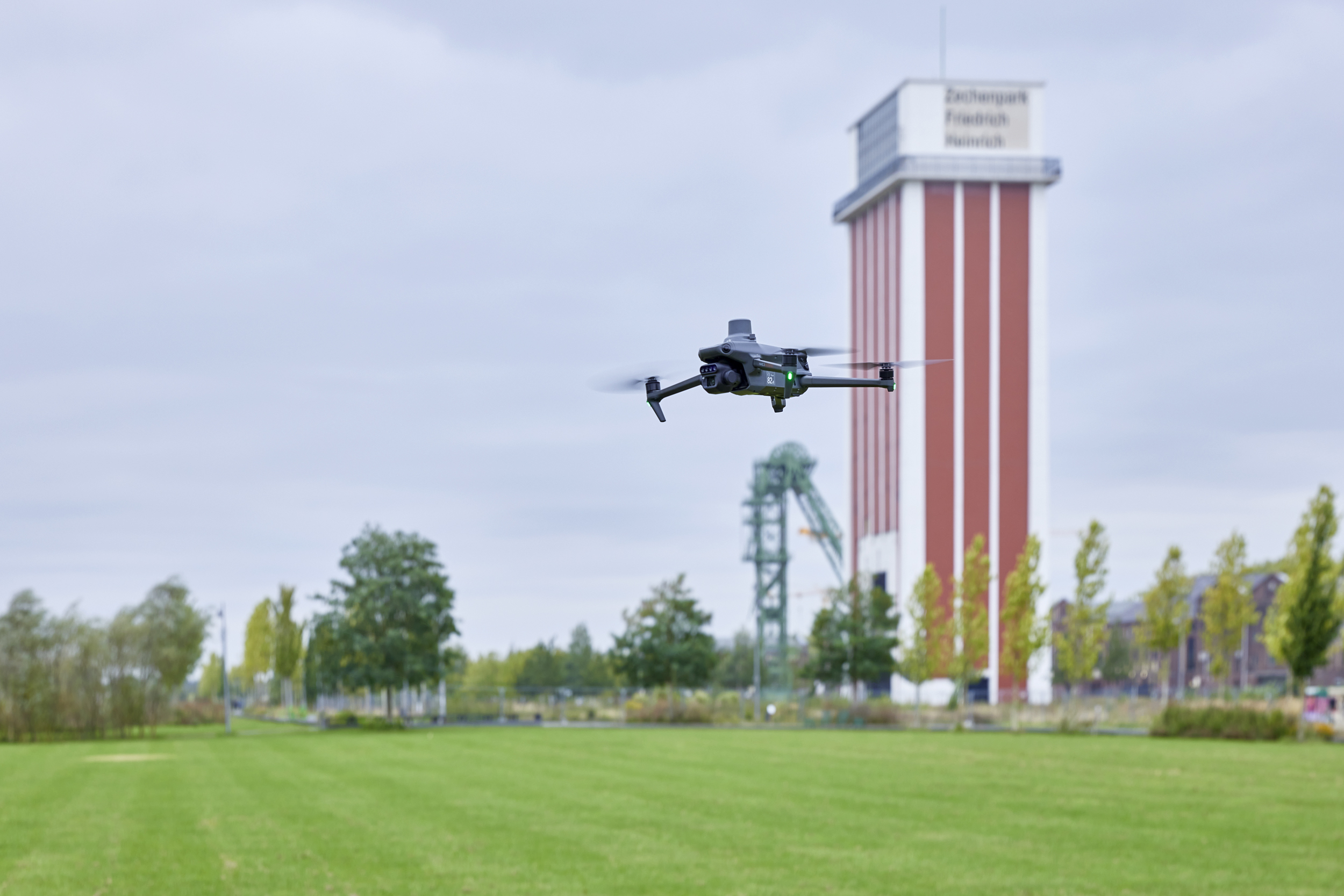



Campus
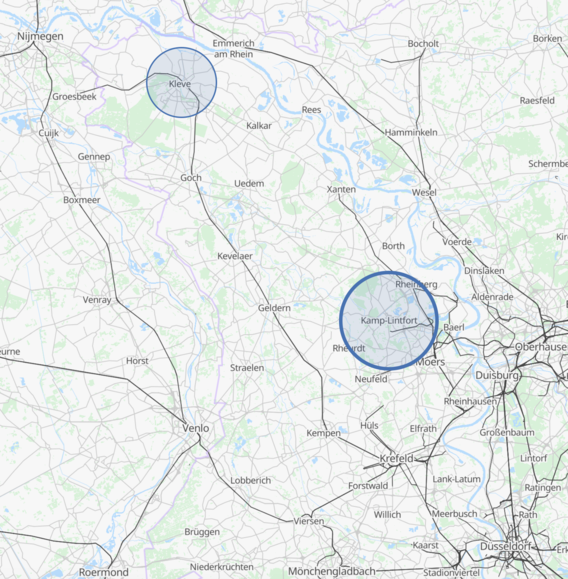
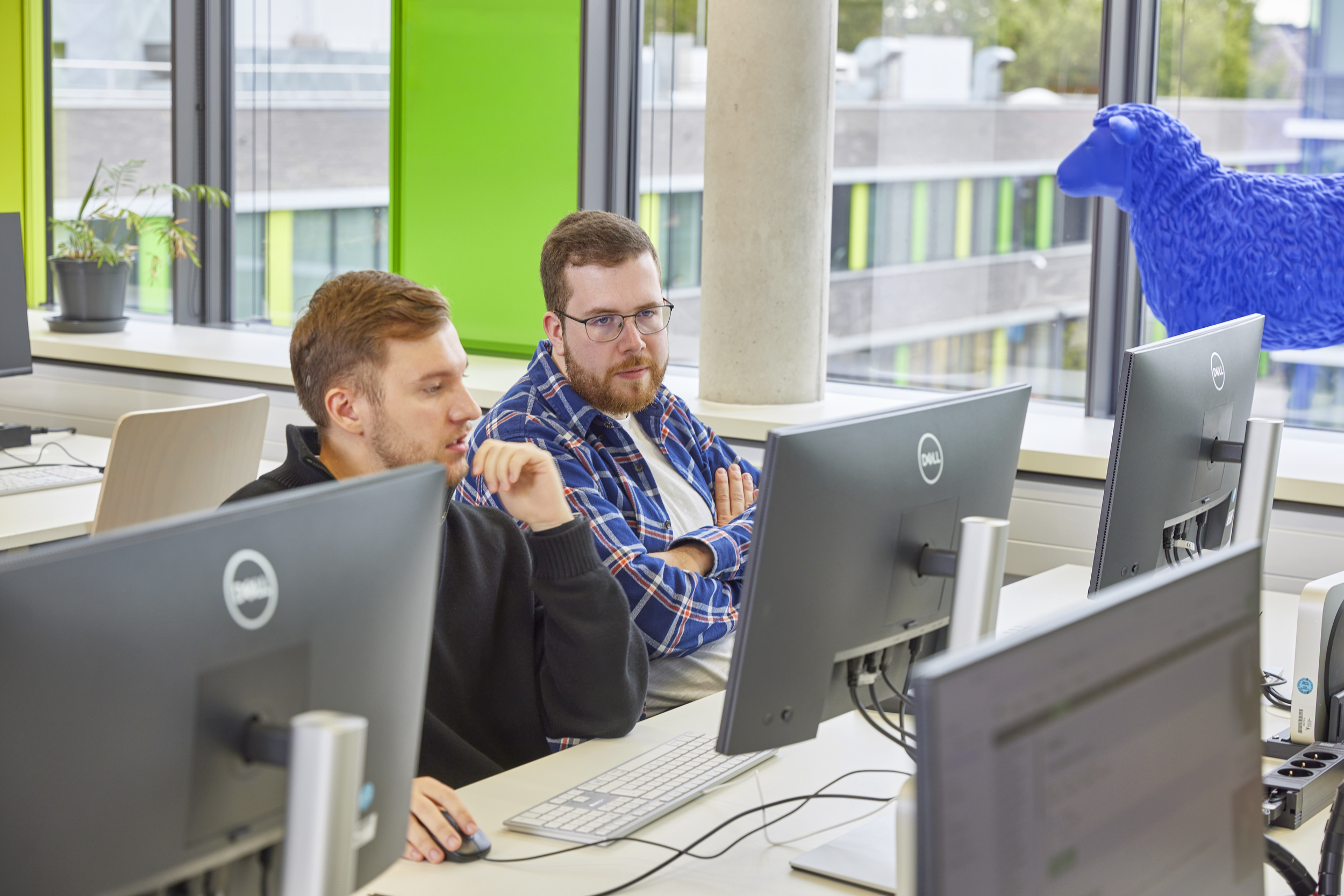
Kamp-Lintfort Campus
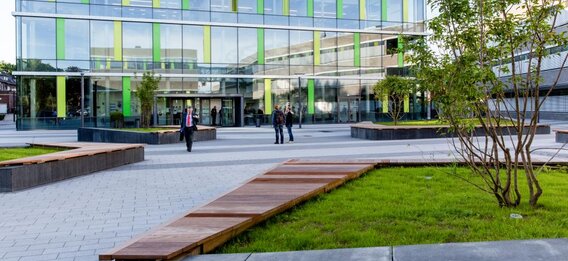
Related degree programmes

Student information

Already studying Information Engineering and Computer Science? Find all the key information you need for your studies here.
Timetable for Winter Semester 2026/27
Please note that there may still be some changes to your timetable. Make sure to check Moodle regularly for the latest updates and enrol on your courses as soon as possible. You’ll also find further information and important announcements there.
All about your studies
Bridging courses are intensive courses designed to help you prepare for your degree before your studies begin. Participation is voluntary and no credit points are awarded. You can use the courses to refresh your existing knowledge and fill in any small gaps before starting your studies.
The courses are held before the start of the winter semester, usually in September. The upcoming course programme will be available at the link below in due course.
The office of the examination board is the central point of contact for all questions and inquiries regarding examinations at your Faculty (Faculty of Communication and Environment).
Office of the Examination Board
On their website you will also find an overview of your first points of contact for various examination-related matters.
Overview
There is also a central Examinations Service for the entire University. It handles the administrative implementation of decisions made by the Examination Board and manages examination-related processes.
Examination Service
Your Faculty of Communication and Environment and the University’s central services offer advice and support throughout your studies – whether you need help with academic matters or personal challenges.
Advice and support services offered by the Faculty
Do you have any questions about your degree programme or exam-related matters? Are you experiencing issues with lecturers, or are you looking for personalised advice? Here you’ll find an overview of the key points of contact within the Faculty of Communication and Environment.
Services offered by the Faculty
Central advisory services
The university’s central advisory services are here to support you with a wide range of topics during your studies and beyond. Whether you need help with finding academic literature, developing a business idea, dealing with mental health challenges, studying with children or a disability, or have questions about anti-discrimination, you’ll find the right contacts and support for different situations in your studies and everyday life.
Central student services
The Central Student Services team is your main point of contact for organisational and administrative questions about your studies. They can help you with applications and admission, enrolment and deregistration, re-registration and leaves of absence, changing degree programmes, as well as questions about semester fees, certificates or health insurance notifications.
Contact
Programme Assistant
Ms Elena Quasten
Tel: 02842/908259680
elena.quasten(at)
Office hours (room number 02 00 455)
Monday–Thursday: 10.00–12.15 and by appointment
Monday, Tuesday, Thursday: 13.30–15.00 and by appointment