
How can you map the Milky Way using something as simple as a ‘stovepipe’?
HSRW
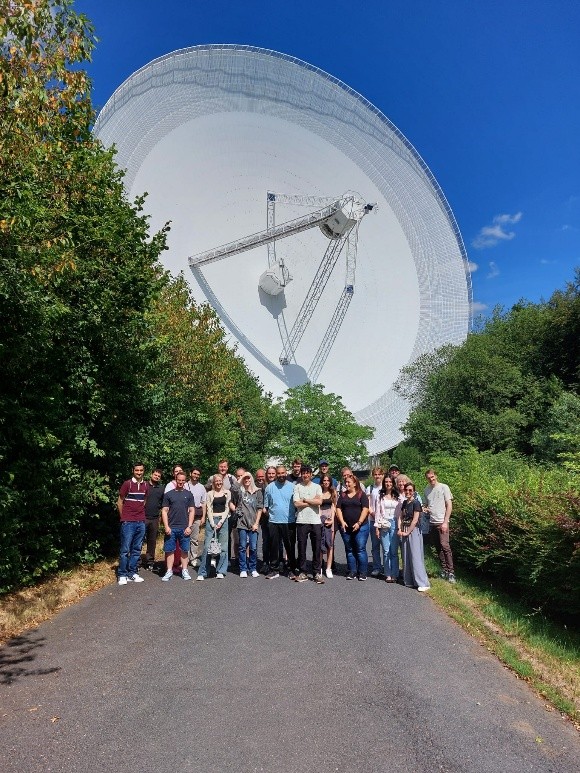
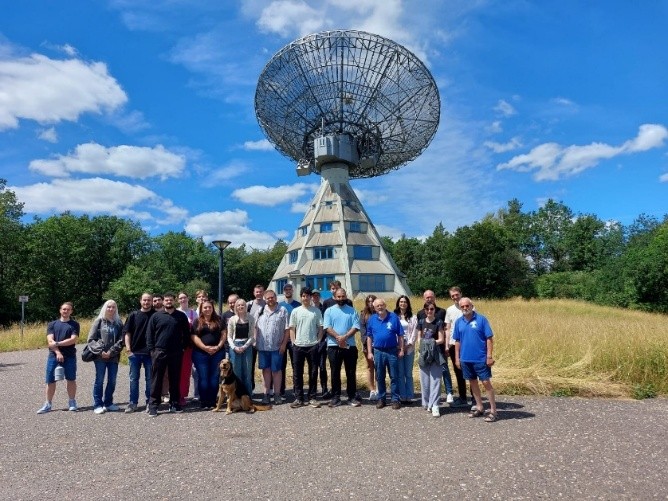
A group of students in front of the Astropeiler Stockert
How can you map the Milky Way using something as simple as a ‘stovepipe’?
How can you map the Milky Way using something as simple as a ‘stovepipe’? What can artificial intelligence reveal about astronomical data? And what is it actually like to work with a major radio telescope? More than 40 students of E-Government and Media Informatics explored these questions in the course ‘Methods and Tools of Modern Astronomy’ during the 2026 summer semester. Along the way, they experienced science not just as theory, but as a real research process.
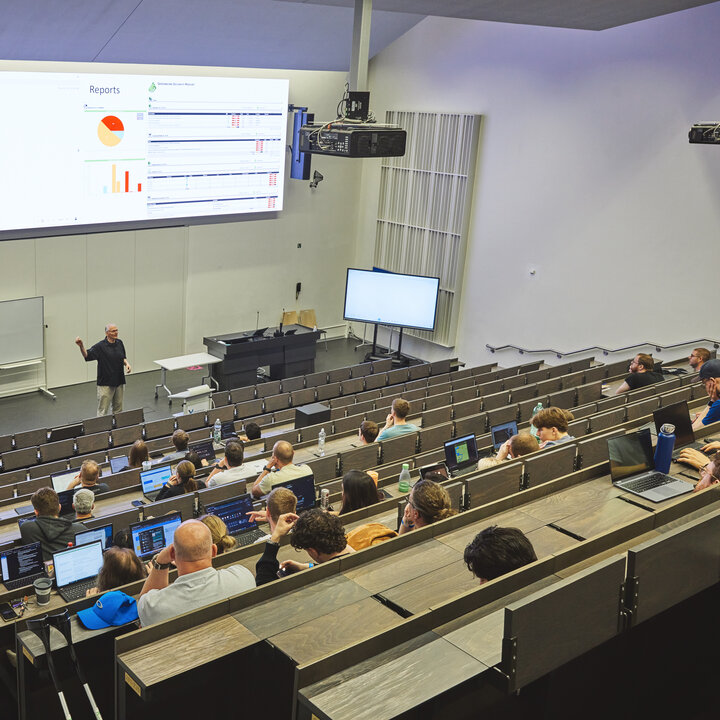
Led by Dr Monika Marx-Zimmer and Professor Dr Frank Zimmer, the course brought together the fundamentals of astronomy with computer science, mathematics and hands-on research. Astronomy is, after all, both one of the oldest sciences and a cutting-edge field in which powerful computers, huge volumes of data and artificial intelligence play an increasingly important role. Modern astronomy is about far more than simply looking through a telescope: major research facilities generate enormous datasets that need to be processed and explored using mathematical methods, simulations, visualisations and, increasingly, AI.
This is exactly where the course came in. Alongside the astronomical and physical foundations, the focus was firmly on methods and practical tools. Students programmed, ran simulations and analysed data, developed their own applications and learning tools, and experimented with AI-based methods. They also created interactive visualisations and engaging animations that helped them explore scientific concepts for themselves and communicate them to others.
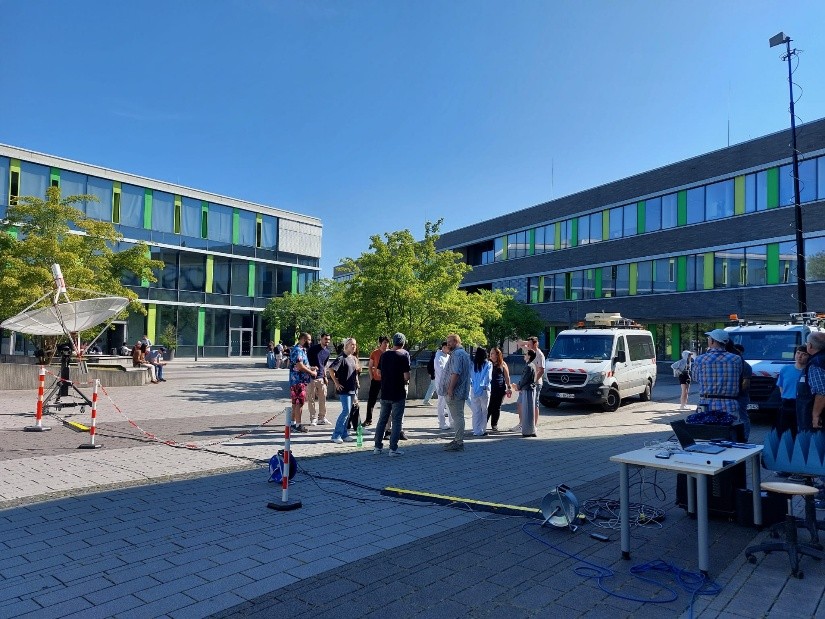
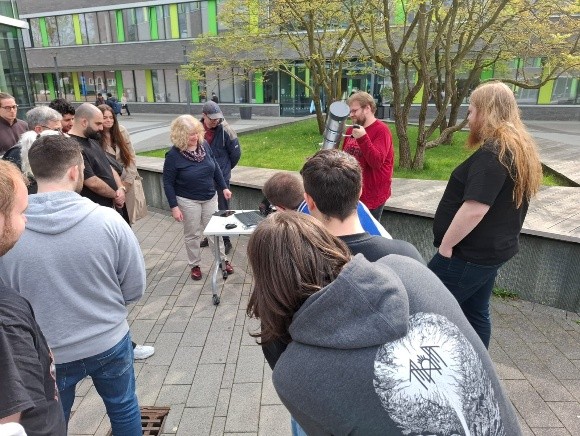
Their introduction to practical radio astronomy began in an unusual way: using a simple waveguide – affectionately nicknamed the ‘stovepipe’ – the students detected the 21 cm line of neutral hydrogen (HI) in the Milky Way, allowing them to make the plane of our galaxy visible. They later took their observations a step further using the University’s own 2.3-metre radio telescope on campus. By measuring the velocity of hydrogen, they gained a direct insight into the structure and rotation of our galaxy.
The course also offered plenty of opportunities to experience astronomy beyond the campus. At CPI Vertex Antennentechnik, students visited a company specialising in antenna technology and radio telescopes, whose work includes supporting NASA’s Artemis lunar missions.
At the Astropeiler Stockert radio telescope, they observed the Milky Way in HI and watched a live pulsar measurement.
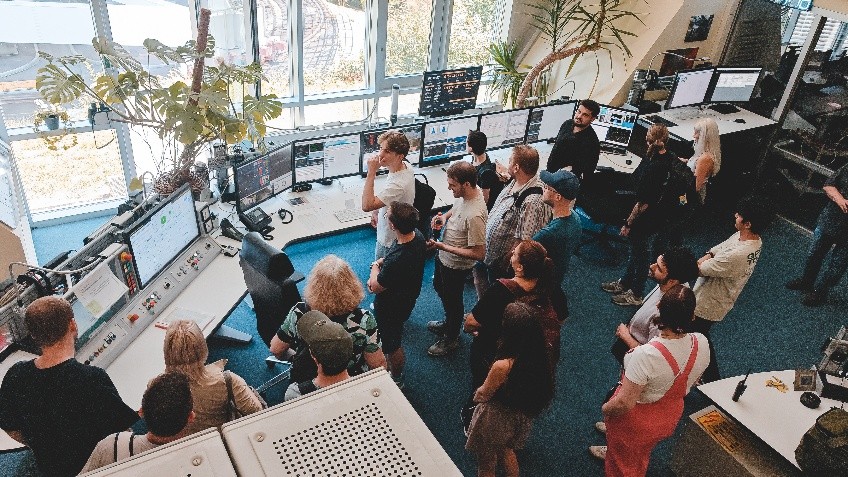
At the Effelsberg Radio Observatory of the Max Planck Institute for Radio Astronomy, students got a behind-the-scenes look at the control room and visited the elevation platform of the impressive 100-metre radio telescope.
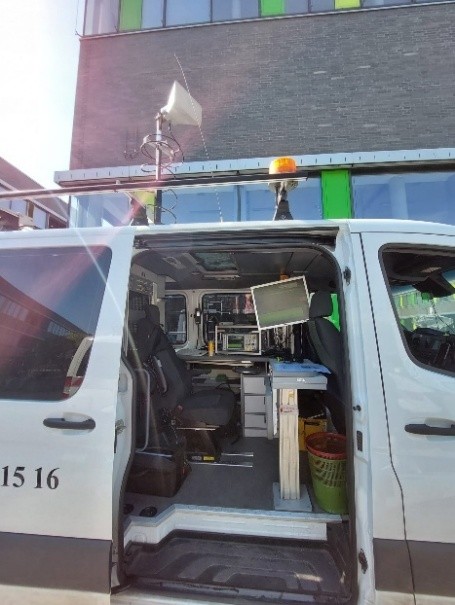
Finally, working with the Federal Network Agency (Bundesnetzagentur), Rheurdt branch, the students tracked down sources of radio interference – including surprisingly everyday culprits such as a simple USB hub – while gaining practical experience of antenna and measurement technology.
The course is a great example of research-based learning at the University. Students develop their own research questions, collect data, analyse it using modern methods and present their findings. Combining real research infrastructure and authentic data with computer science, natural sciences and artificial intelligence creates an environment in which course content becomes something students can actively put into practice.
It also shows just how versatile computer science can be: connecting cutting-edge research with hands-on experience and turning knowledge gained during a degree into tools for exploring real scientific questions.
And sometimes, a journey into the universe begins in the most unlikely way – with a ‘stovepipe’ on campus.